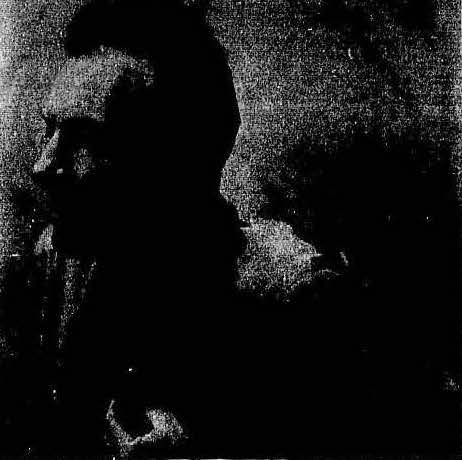
Pete Seeger sat down for questions from students after his performance at SUNY Albany’s Page Hall.
Seeger Comments on Question at Interview; Topics Range from Controversy to Freedom
By Debby Friedman / Photo by Douglas G. Upham / Albany Student Press, Vol. LI, No. 7.
“Music is better than words” said Pete Seeger, when he was asked if he found that music crosses language barriers. Seeger was interviewed after his concert here last week by several students.
He gave his answers and opinions on the numerous questions that were posed by Gerry Terdiman who represented radio station WFLY (92.3 on the FM dial) where he hosts “The World of Folk Music” from 4-5 p.m. on Saturdays, Tim Atwell, and this writer.
Life “Machine Run”
One of the songs that Seeger sang told that for “everything there is a time.” He later commented that “so much of our life is now machine run -almost everything will be done by mechanical devices. All we have to do is pay.”
However, “a healthy musical state allows people to make their own music, though you need professional experts also.”
Last year Seeger traveled around the world and had an opportunity to observe various cultures. He sang of these varied cultures and said “Vive la difference.” In the world’s veritable melting pot of cultures, he said “we are all cousins, but everyone will always be somewhat different. Thank the Lord for these differences.”
Controversy and College
During the concert he said, “If I have said anything controversial tonight, I hope it is.” This seemed to express part of his attitude to stir people to think and emerge from the complacency that is all too prevalent in modern society.
*It’s easier to keep our mouths shut … and mind our own business,” sang Seeger.
He was asked what he thought of the riots at Berkeley and of the free speech movement. To this, he responded that he probably knew about as much as we did, but sald, “In the last five years, more searchIng questions have been asked of me by college students.”
“College is a place for controversy. You can’t have education without it and the experience of asking questions.”
Seeger “sang out the love” as he emotionally sang “If I Had a Hammer,” a song that he wrote about fifteen years ago. He prefaced his remarks on this song by quoting Lincoln on freedom. “If I go to a wolf and say don’t eat my sheep, I have inhibited the wolf’s freedom.”
“Love, oh love, oh careless love, see what love has done to me,” was the refrain of one of his encores.
Many-Sided Truths
He spoke of the results that can arise when labors of love are applied carelessly or unwisely – the broken hearts and the “horror that Einstein would experience if he could see the bombs that have been made as a result of his formula of E equals mc2 which was a labor of love.”
“Moral truth is many-sided – don’t jump to conclusions.”
Then there were the questions about folk music, trends, and impressions. Seeger defined folk music as that which is created by a process where people are unconsciously changing old songs.
He was asked how the rise of commercialism has affected folk music. To this he replied that, “I am commercial – I make my living singing. However, there is always a tendency to lose sight of singing for pleasure.”
Seeger cautioned not to think of the current folk music revival as something that is either on the hit parade or not. He said that no one person is responsible for the current folk song revival but the “Weavers (which he helped organize) and the Kingston Trio have helped.”
Folk Music and Identification
One of the things he was asked was if the folk craze is a reflection of an attempt to identify with the country … now that young song writers like Bob Dylan and Phil Ochs are writing so much protest music which doesn’t go back to the grass roots.
Also, does the urban folk singer have a responsibility to sing about urban conditions rather than traditional songs?
To this, Seeger said that the current craze is an attempt to identify with the country, but “every person in the world has the duty to do his best. Thank the Lord for differences of opinions. People who want to make music now may be inspired by the old, but make new music also.”
“Each year there are different singers and styles. People will realize that they don’t have to like them all.”
Collecting Process
The process of gathering and collecting material for folk songs is a long procedure. Seeger said that he does not collect folk music as such. “I learn from the people who do collect such material. I often feel like the seven blind men who were asked to describe an elephant when I ask about songs.
“I have been led astray by wrong information on songs I like.” He said that no one person has influenced him the most. He has developed his style after listening to many singers and borrowing from many writers.
Seeger replied to the question, to what do you attribute your popularity, by saying: “I shout and holler and get my audience to sing with me (as was often done during his performance at State) so they don’t listen to me and drown me out.”
“And I like to hear them (the audience) sing.”
Recent Comments